

























































































































































Keto Diet for Depression: What Research Says About Benefits and Risks
Author: RVLNSV PRASAD
Updated On: October 2026
About Us
Author Bio
Editorial Policy
Contact Us
Introduction
The keto diet for depression has attracted growing interest as researchers explore the relationship between nutrition, brain metabolism, and mental health. Some early studies suggest that a ketogenic diet may help reduce depressive symptoms in certain people. However, the evidence is still developing, and it is too early to recommend keto as a standard treatment for depression.
Depression can affect energy, concentration, sleep, appetite, motivation, and everyday activities. Finding an effective treatment may require more than one approach, particularly when symptoms persist despite initial care.
The ketogenic diet is different from an ordinary low-carbohydrate eating plan. It sharply restricts carbohydrates and provides much of its energy from fat, encouraging the body to produce ketones. These compounds can serve as an alternative fuel source for the brain.
Scientists are investigating whether this metabolic change could influence processes associated with mood. The possibilities include changes in brain energy metabolism, inflammation-related pathways, and communication between brain cells. These mechanisms are scientifically interesting, but they do not automatically prove that a diet improves depression.
Two important publications have strengthened the research discussion. A systematic review and meta-analysis published in JAMA Psychiatry in 2026 found an association between ketogenic diets and improvements in depressive symptoms in randomized trials. A separate randomized clinical trial investigated keto in adults with treatment-resistant depression. Both studies offer useful evidence, but neither establishes keto as a replacement for established mental health treatment. Read the 2026 systematic review and the randomized clinical trial.
This guide explains what the research actually shows, how a ketogenic diet works, who may face additional risks, and how to discuss dietary changes with a healthcare professional. The goal is to help readers make informed decisions without unrealistic promises.
Quick Answer: Can the Keto Diet Help With Depression?
The ketogenic diet may help reduce depressive symptoms in some people, but the evidence remains preliminary. Research published in 2026 found encouraging results, although the studies had limitations involving study design, follow-up duration, and differences between participants and dietary interventions.
Keto is not an established first-line treatment for depression. It should not replace psychotherapy, prescribed medication, or professional mental health care.
A very-low-carbohydrate diet can also cause side effects, restrict nutrient-rich foods, and interact with some medical conditions and medicines. Anyone considering it specifically for depression should first discuss the decision with a qualified healthcare professional and, ideally, a registered dietitian experienced in ketogenic diets.
The National Institute of Mental Health (NIMH) explains that established depression treatments include psychotherapy, medication, or a combination, depending on the person’s needs and clinical circumstances.
Key Takeaways
- The keto diet is being investigated as a possible supportive approach to depression, but it is not an established depression treatment.
- A 2026 systematic review found modest improvements in depressive symptoms in randomized trials, with important limitations.
- A 2026 randomized trial in treatment-resistant depression found an early difference between diets that was not statistically significant at the later follow-up.
- Ketones can provide an alternative fuel source for the brain, but this does not prove that ketosis improves mood.
- Keto may cause fatigue, headaches, constipation, and other side effects, especially during the early adjustment period.
- People taking certain diabetes medicines, those with some medical conditions, and people with a history of eating disorders may need to avoid keto or receive specialist guidance.
- Do not stop antidepressants or other prescribed treatment to try a ketogenic diet.
- A balanced, sustainable eating pattern may be a more suitable choice for many people.
What Is the Ketogenic Diet?
The ketogenic diet is a high-fat, very-low-carbohydrate eating pattern that provides a moderate amount of protein. Its purpose is to encourage the body to enter a metabolic state called ketosis.
When carbohydrate intake falls substantially, the body has less glucose available from food. The liver then produces ketones from fat, which can supply energy to the brain and other tissues.
A conventional ketogenic diet often restricts carbohydrate intake to approximately 20–50 grams per day, although the amount needed to achieve ketosis varies. A medically supervised ketogenic diet may use a specific nutritional prescription that differs from popular weight-loss versions.
The Harvard T.H. Chan School of Public Health’s ketogenic diet review explains how ketosis works and discusses potential nutritional and health limitations.
What foods are commonly included?
| Food group | Examples | Important consideration |
|---|---|---|
| Unsaturated fats | Olive oil, avocado, nuts, and seeds | Useful sources of fats, but portions and overall dietary balance still matter. |
| Protein foods | Eggs, fish, tofu, poultry, and other suitable protein sources | Individual needs vary. |
| Low-carbohydrate vegetables | Spinach, cabbage, cauliflower, cucumber, and broccoli | Provide fiber and micronutrients. |
| Dairy or alternatives | Unsweetened yogurt, cheese, or suitable fortified alternatives | Nutrient content differs between products. |
| Foods usually restricted | Rice, bread, potatoes, most grains, many fruits, sugar, and many legumes | Restricting these foods can make adequate fiber and nutrient intake more challenging. |
The exact foods depend on the chosen diet and individual circumstances. A well-planned version should not simply consist of butter, processed meat, cheese, and oil. Food quality matters even when carbohydrate intake is restricted.
How Can Ketones Affect Brain Function?
The brain normally uses glucose as a major energy source. During nutritional ketosis, it can also use ketones produced by the liver.
This metabolic flexibility is one reason researchers are studying ketogenic diets for neurological and psychiatric conditions. However, the relationship between brain energy and depression is complex.
1. Alternative fuel for the brain
Ketones can cross the blood-brain barrier and provide energy to brain cells. Researchers are examining whether changes in energy availability or metabolism could influence some processes associated with psychiatric symptoms.
Yet the fact that the brain can use ketones does not demonstrate that it functions better emotionally or cognitively when a person follows a keto diet.
2. Inflammation-related pathways
Inflammatory processes have been investigated in some forms of depression. Ketogenic diets may influence several metabolic and inflammatory pathways, but findings from laboratory research cannot establish a clinical antidepressant effect in humans.
A diet that changes a biological marker does not necessarily improve mood, functioning, or quality of life.
3. Brain-cell communication
Researchers are also investigating whether ketones and related metabolic changes influence neurotransmitter systems and other signalling processes. These are potential explanations, not established reasons to prescribe keto for depression.
The important distinction is between a plausible biological mechanism and evidence that a treatment helps people. Clinical studies measuring depressive symptoms and daily functioning are needed to establish whether the dietary intervention produces meaningful benefits.
Latest Research: What the 2026 Studies Found
The most important addition to this article is the recent clinical evidence. Rather than simply saying that research is growing, it is useful to explain what the studies measured and where uncertainty remains.
1. A 2026 systematic review and meta-analysis
A systematic review published online in November 2025 and appearing in the January 2026 issue of JAMA Psychiatry examined ketogenic diets and mental health outcomes. It included 50 studies involving 41,718 participants across the reviewed evidence.
In its analysis of randomized trials measuring depressive symptoms, the review found a statistically significant association between ketogenic diets and symptom improvement compared with control diets. The authors reported substantial heterogeneity between the depression trials, meaning results varied across studies.
The review did not find a significant association with anxiety symptoms in randomized trials. Its authors emphasized that larger, better-designed studies with standardized dietary protocols and longer follow-up are needed. Read the full systematic review and meta-analysis.
What this means for readers: The findings justify further research into keto and depression. They do not establish that the diet will work for a particular individual, determine the best ketogenic protocol, or show that keto should replace standard treatment.
2. A 2026 randomized clinical trial in treatment-resistant depression
A randomized clinical trial published in JAMA Psychiatry on February 4, 2026, examined a ketogenic diet in adults with treatment-resistant depression. The trial enrolled 88 adults and compared the ketogenic diet with a phytochemical-rich control diet.
At six weeks, the ketogenic diet group showed a modest additional improvement in depression scores. At 12 weeks, the difference between the groups was not statistically significant.
The study is important because randomized trials provide stronger evidence about possible treatment effects than personal anecdotes or uncontrolled observations. However, the result does not prove that keto is an effective long-term treatment, and the findings cannot automatically be applied to people with less severe depression or to everyone who experiences low mood.
Read the randomized clinical trial or view its PubMed record.
3. Why more research is still necessary
The two publications should not be interpreted as a universal recommendation for ketogenic diets.
Important questions remain:
- Which people, if any, are most likely to benefit?
- How does keto compare with established depression treatments?
- Are any benefits sustained after the intervention ends?
- What is the most suitable dietary composition?
- How do adverse effects and nutritional limitations affect long-term adherence?
- Can results be replicated in larger and more diverse populations?
The NICE depression guideline continues to emphasize individualized treatment choices based on clinical needs and preferences. The emerging keto evidence does not change the need for appropriate assessment and established care.
Potential Benefits of the Keto Diet for Depression
Researchers are investigating several possible benefits, but it is essential to distinguish preliminary findings from proven clinical outcomes.
Possible reduction in depressive symptoms
The 2026 systematic review found modest improvement in depressive symptoms across randomized trials, while the treatment-resistant depression trial found an early difference between groups.
These findings are encouraging enough to justify additional trials. They do not establish keto as a reliable treatment for depression, and they do not mean every person will experience improved mood.
Possible changes in energy metabolism
Some people report changes in perceived energy or concentration when changing their diet. Such experiences may reflect several factors, including meal timing, total energy intake, sleep, expectations, and metabolic adaptation.
There is not enough evidence to promise that keto will reduce brain fog or improve concentration in people with depression.
Possible effects on metabolic health
Ketogenic diets can produce short-term changes in weight and some metabolic markers in certain populations. However, those outcomes are separate from depression treatment.
The Harvard Nutrition Source ketogenic diet review discusses both potential short-term benefits and concerns about nutritional adequacy, cholesterol, and long-term sustainability.
Weight loss is not necessary for a person to benefit from depression treatment, and a person should not assume that losing weight will resolve depressive symptoms.
Keto Diet Risks and Side Effects
A ketogenic diet is restrictive and may not suit everyone. The risks depend on the person’s health, medications, dietary quality, and ability to meet nutritional needs.
Early side effects
During the initial adjustment period, some people experience:
- Headaches.
- Fatigue or weakness.
- Nausea.
- Constipation or other digestive changes.
- Dizziness or changes in fluid balance.
- Irritability or difficulty concentrating.
These symptoms should not automatically be dismissed as a normal part of the diet. Persistent or severe symptoms deserve medical assessment.
Nutrient and fiber gaps
Restricting grains, legumes, and many fruits can make it harder to obtain enough fiber and certain vitamins and minerals. A poorly planned ketogenic diet may rely heavily on processed foods and saturated fats.
The Harvard ketogenic diet review highlights concerns about nutrient deficiencies, gastrointestinal symptoms, and possible changes in LDL cholesterol.
If a clinician considers keto appropriate, dietary planning should emphasize nutrient quality and adequate intake rather than simply minimizing carbohydrates.
Cholesterol and cardiovascular concerns
Some people experience an increase in LDL cholesterol when following a ketogenic diet. The magnitude varies between individuals and depends partly on the foods consumed.
The Harvard Health review of keto and heart health discusses concerns about LDL cholesterol and the limited evidence on long-term outcomes.
A healthcare professional may recommend monitoring relevant laboratory values based on your medical history and dietary plan.
Who Should Avoid Keto or Seek Specialist Advice?
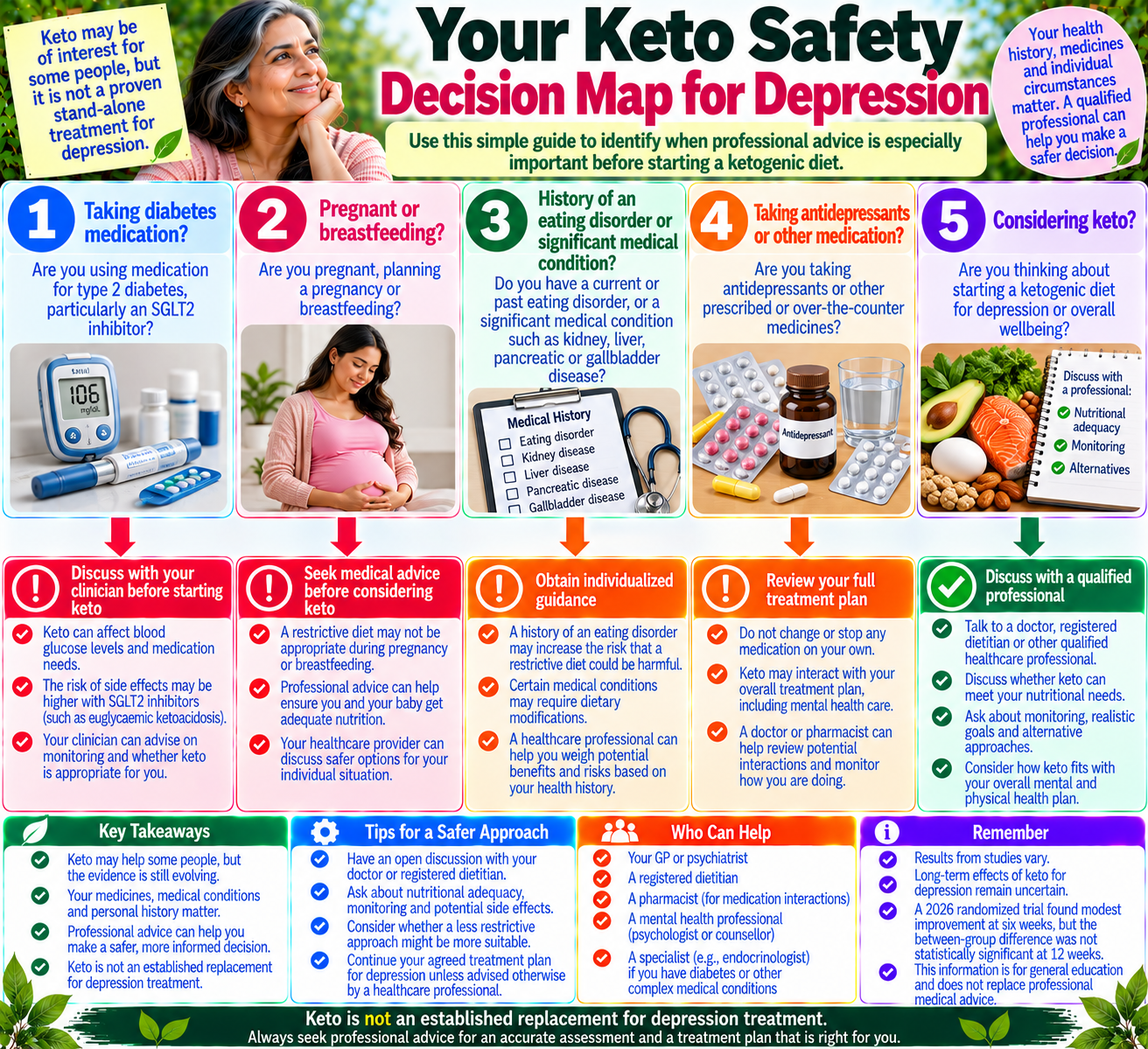
A strict ketogenic diet should not be started casually when a person has a medical condition or takes medication that could be affected by major carbohydrate restriction.
| Situation | Why professional guidance matters |
|---|---|
| Type 1 diabetes | Significant carbohydrate restriction can alter insulin requirements and increase the risk of dangerous metabolic complications. |
| Type 2 diabetes treated with glucose-lowering medication | Medication doses may need review because of changes in blood glucose and food intake. |
| Use of SGLT2 inhibitors | Combining these medicines with a ketogenic diet can increase the risk of ketoacidosis, including cases in which blood glucose is not markedly elevated. |
| Kidney or advanced liver disease | The diet may need to be avoided or substantially modified depending on the condition. |
| Pancreatitis or certain disorders of fat metabolism | Ketogenic diets may be unsuitable or contraindicated. |
| Pregnancy or breastfeeding | Safety and nutritional adequacy are concerns; strict keto should not be undertaken without specialist assessment. |
| History of an eating disorder | Rigid food rules and restrictions may worsen disordered eating patterns. |
| Underweight status or unexplained weight loss | Further dietary restriction may compromise nutritional intake. |
| High LDL cholesterol or familial hypercholesterolemia | The diet may worsen cholesterol levels in some individuals. |
A 2025 review in the medical literature discusses ketogenic diet contraindications, side effects, and drug interactions. Read the review on safety and clinical precautions.
If you take medication for depression, discuss major dietary changes with your prescriber. Do not assume that keto will improve medication effectiveness or that you can reduce a prescribed dose. There is no established evidence that a ketogenic diet allows people to stop antidepressants safely.
How to Discuss Keto With Your Healthcare Professional
If you are considering the keto diet for depression, start with a conversation rather than a strict meal plan.
Step 1: Clarify your treatment goal.
Are you hoping to improve depressive symptoms, manage a separate metabolic condition, change your eating pattern, or address several concerns?
Being clear about your goal helps your healthcare professional evaluate whether keto is appropriate and what outcomes should be monitored.
Step 2: Review your medical history and medications.
Tell your clinician about current medicines, existing health conditions, previous eating disorders, and any recent changes in appetite or weight.
This is particularly important if you take diabetes medication, blood-pressure medication, diuretics, or medicines that affect fluid balance.
Step 3: Discuss a realistic alternative.
Keto is not the only way to improve diet quality. A less restrictive pattern containing vegetables, fruit, legumes, whole grains, nuts, seeds, and suitable protein sources may be easier to maintain and may better meet your nutritional needs.
The best approach is one that is safe, nutritionally adequate, and compatible with your treatment plan.
Step 4: Agree on monitoring
If a specialist believes a ketogenic diet is appropriate, discuss how progress and side effects will be monitored. Depending on your circumstances, this may include dietary adequacy, mood symptoms, weight changes, blood glucose, cholesterol, and other relevant measures.
Do not use ketone readings as a measure of depression severity. A high ketone level does not demonstrate that your mental health is improving.
A More Practical Food-First Approach to Brain Health
If your goal is to support mental well-being through nutrition, you do not necessarily need to enter ketosis.
A varied eating pattern can provide nutrients and dietary components that support general health while allowing more flexibility.
Include a variety of vegetables and fruit.
Leafy greens, carrots, tomatoes, citrus fruit, berries, and other produce supply different vitamins, minerals, and plant compounds. Choose options that suit your budget and preferences.
Eat adequate protein.
Dal, beans, chickpeas, eggs, dairy products, fish, tofu, and other protein sources can contribute to a balanced diet. Your individual protein needs depend on your health and circumstances.
Choose fats thoughtfully.
Nuts, seeds, olive oil, and other sources of unsaturated fats can fit into a balanced eating pattern. Avoid assuming that consuming more fat automatically improves brain function.
Maintain a sustainable meal routine.
When mood is low, complicated recipes and rigid rules can become difficult to manage. Simple meals, convenient ingredients, and regular eating opportunities may be more useful than pursuing a demanding dietary protocol.
The WHO healthy-diet guidance emphasizes dietary variety, balance, and adequacy rather than a single mandatory eating pattern.
Common Mistakes to Avoid
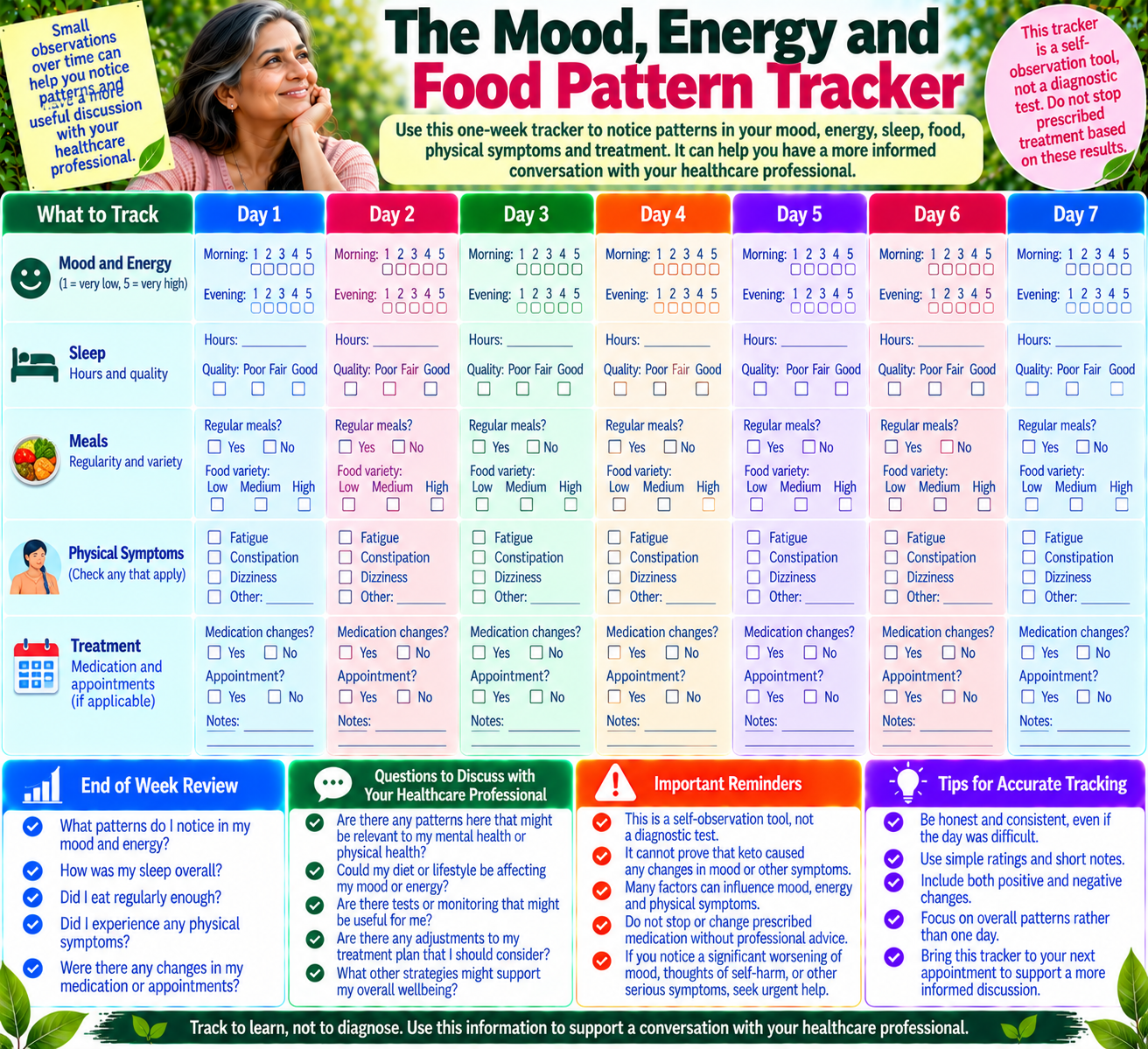
Assuming ketosis automatically improves mood
Ketosis is a metabolic state, not a measurement of mental health. A person can reach ketosis without experiencing improvement in depressive symptoms.
Believing keto is a proven cure
The 2026 research is promising but preliminary. Keto has not replaced established depression treatments, and its long-term effectiveness for depression remains uncertain.
Ignoring diet quality
A diet made mainly of processed meats, butter, and other saturated-fat-rich foods may be nutritionally poor even if it meets a ketogenic target. Food quality and overall nutritional adequacy still matter.
Starting without reviewing medication risks
Carbohydrate restriction can change medication requirements and metabolic risks. Some combinations are potentially dangerous, so professional review is essential.
Stopping treatment too soon
Do not stop psychotherapy, antidepressants, or other prescribed treatment because you want to experiment with diet. Treatment changes should be discussed with the clinician responsible for your care.
Treating personal stories as scientific proof
One person’s experience cannot establish whether a diet works for a broader population. Genuine experiences may be useful context, but research findings should guide claims about effectiveness.
How Long Does It Take to See Mental Health Benefits?
There is no reliable timeline for mood improvement from a ketogenic diet because the evidence is still limited.
Ketosis may develop within days of substantial carbohydrate restriction, but entering ketosis does not mean depressive symptoms will improve. Changes in mood can be influenced by the underlying condition, treatment, sleep, daily circumstances, and many other factors.
The 2026 randomized trial found an early difference between dietary groups at six weeks, but the difference was not statistically significant at 12 weeks. That result does not support promising readers that they will feel better after a fixed number of days.
If you are trying a medically supervised dietary intervention, agree on an appropriate review schedule with your healthcare professional. Seek help promptly if symptoms worsen rather than waiting for the diet to take effect.
Combining Nutrition With Established Depression Care
Dietary choices can be part of a broader approach to well-being, but depression treatment should be guided by the person’s clinical needs.
Psychotherapy
Evidence-based psychotherapy, including cognitive behavioral therapy and interpersonal therapy, can help people address depressive symptoms and improve functioning. The National Institute of Mental Health’s psychotherapy guidance explains these approaches and their uses.
Medication when appropriate
Antidepressants may be important for some people, depending on symptom severity, previous treatment, and individual circumstances. Medication decisions should be made with a qualified prescriber.
Physical activity and sleep
Appropriate movement and a consistent sleep routine can support general health. They should complement, rather than replace, necessary treatment.
Social and practical support
If depression makes cooking, shopping, or keeping appointments difficult, practical assistance can be valuable. Ask someone you trust for help when needed.
A combined approach allows nutrition to contribute to general well-being without placing unrealistic responsibility on a single diet.
Frequently Asked Questions
1. Can the keto diet cure depression?
No. Current research does not establish keto as a cure for depression. Some 2026 findings suggest possible symptom benefits, but larger and longer studies are needed before it can be recommended as a standard treatment.
2. What did the 2026 keto and depression research find?
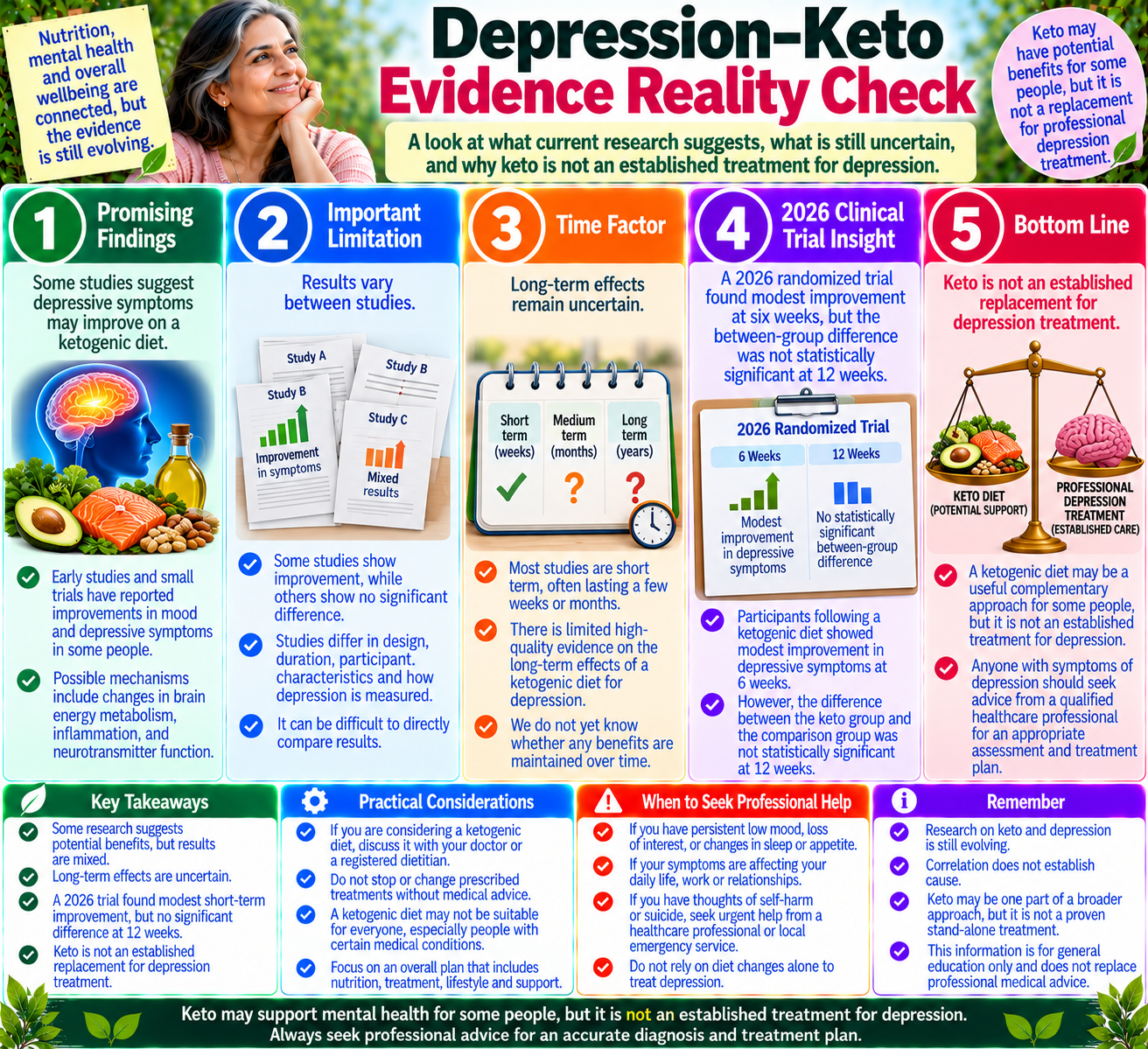
A systematic review and meta-analysis published in JAMA Psychiatry found modest improvements in depressive symptoms in randomized trials, although results varied between studies. A separate randomized trial found an early benefit in treatment-resistant depression that was not statistically significant at the later follow-up. These findings support further research, not a universal recommendation.
3. Is the ketogenic diet safe with antidepressants?
Safety depends on the medication, the person’s health, and the dietary change. There is no established rule that keto improves antidepressant effectiveness. Discuss the plan with your prescriber and do not change your medication independently.
4. Do ketones provide better fuel for the brain?
Ketones can serve as an alternative fuel source for the brain. However, the ability to use ketones does not prove that a person will experience better concentration, fewer depressive symptoms, or improved emotional stability.
5. Can keto reduce brain fog?
Some people report changes in concentration after changing their diet, but evidence is insufficient to promise that keto reduces brain fog associated with depression. Concentration problems can have many causes and may require clinical assessment.
6. What are the main side effects of keto?
Possible side effects include fatigue, headaches, nausea, constipation, dizziness, and changes in cholesterol or nutrient intake. Serious complications can occur in certain medical situations, especially when keto is combined with some diabetes medicines.
7. Is keto better than a Mediterranean-style diet for depression?
There is not enough evidence to conclude that keto is superior to a Mediterranean-style or other balanced eating pattern for treating depression. The two approaches differ substantially in carbohydrate intake, food variety, and sustainability. Choose dietary changes based on your needs and professional guidance.
8. Should I lose weight to improve depression?
No. Weight loss is not a requirement for depression treatment. If weight management is medically appropriate, it can be addressed separately while treating depression directly. Unintentional weight loss should be assessed rather than encouraged.
9. Can I try a less restrictive low-carbohydrate diet instead?
Possibly, depending on your health and goals. A less restrictive approach may be easier to maintain and may allow more vegetables, fruit, legumes, and whole grains. Discuss dietary changes with a healthcare professional if you have depression, chronic conditions, or take medication.
10. What should I do if my depression gets worse while dieting?
Stop treating the diet as the priority and contact your healthcare professional promptly. Do not delay assessment while waiting for ketosis or nutritional changes to improve your mood. If you have thoughts of suicide or cannot keep yourself safe, seek urgent help.
Conclusion: Is the Keto Diet Worth Considering for Depression?
The keto diet for depression is an emerging research area, not an established treatment. The 2026 systematic review and randomized clinical trial provide reasons for further investigation, but the evidence remains too limited to promise reliable or lasting benefits.
Ketones can provide energy to the brain, and researchers are studying how ketogenic diets may influence metabolic and biological processes associated with mood. These mechanisms are not proof that ketosis will improve depression in an individual.
For most readers, the safest starting point is to focus on appropriate mental health care, balanced nutrition, regular sleep, manageable activity, and practical support. If you are interested in keto specifically, discuss the risks and potential benefits with a qualified healthcare professional before making a major dietary change.
You do not need to follow an extreme diet to take your mental health seriously. A useful plan is one that protects your safety, meets your nutritional needs, and fits your circumstances while keeping effective depression treatment at the center of care.
Author Note
Author: RVLNSV PRASAD
This article reviews emerging research on ketogenic diets and depression. It distinguishes preliminary findings from established treatment recommendations and is intended to help readers prepare informed questions for qualified healthcare professionals. Personal recovery stories should be included only when they reflect genuine experiences; individual anecdotes cannot establish treatment effectiveness.
Medical Disclaimer
This article is for general educational purposes and does not replace medical assessment, diagnosis, or treatment. The ketogenic diet is not an established treatment for depression. Do not stop, reduce, or change prescribed antidepressants or other medicines without consulting your healthcare professional. People with relevant medical conditions, medication risks, pregnancy, or a history of eating disorders should seek specialist guidance before considering a restrictive diet. If depressive symptoms become severe or you may harm yourself, seek urgent professional help.
Fitness Disclaimer
Physical activity should be appropriate for your health, energy, and fitness level. Avoid intense exercise when unwell or experiencing concerning symptoms. Consult a healthcare professional before making major exercise changes if you have a medical condition or significant fatigue.
Sources
- JAMA Psychiatry — Ketogenic Diets and Depression and Anxiety: A Systematic Review and Meta-Analysis, 2026
- JAMA Psychiatry — A Ketogenic Diet for Treatment-Resistant Depression: A Randomized Clinical Trial, 2026
- PubMed — Randomized Clinical Trial Record
- Harvard T.H. Chan School of Public Health — Ketogenic Diet Review
- Harvard Health — Keto Diet and Heart Health
- National Institute of Mental Health — Depression
- National Institute of Mental Health — Psychotherapies
- NICE — Depression in Adults: Treatment and Management
- Review — Ketogenic Diet Contraindications, Side Effects and Drug Interactions
- World Health Organization — Healthy Diet
More Stories from this blog









[…] 5 Keto Diet for Depression: Expert Tips for Safe and Effective Use […]
[…] 5 Keto Diet for Depression: Expert Tips for Safe and Effective Use […]
[…] 5 Keto Diet for Depression: Expert Tips for Safe and Effective Use […]
[…] 5 Keto Diet for Depression: Expert Tips for Safe and Effective Use […]
[…] 5 Keto Diet for Depression: Expert Tips for Safe and Effective Use […]
[…] 5 Keto Diet for Depression: Expert Tips for Safe and Effective Use […]
[…] 5 Keto Diet for Depression: Expert Tips for Safe and Effective Use […]
[…] 5 Keto Diet for Depression: Expert Tips for Safe and Effective Use […]
[…] 5 Keto Diet for Depression: Expert Tips for Safe and Effective Use […]
[…] 5 Keto Diet for Depression: Expert Tips for Safe and Effective Use […]
[…] 5 Keto Diet for Depression: Expert Tips for Safe and Effective Use […]
[…] 5 Keto Diet for Depression: Expert Tips for Safe and Effective Use […]
[…] 5 Keto Diet for Depression: Expert Tips for Safe and Effective Use […]
[…] 5 Keto Diet for Depression: Expert Tips for Safe and Effective Use […]
[…] 5 Keto Diet for Depression: Expert Tips for Safe and Effective Use […]
[…] 5 Keto Diet for Depression: Expert Tips for Safe and Effective Use […]
[…] 5 Keto Diet for Depression: Expert Tips for Safe and Effective Use […]
[…] 5 Keto Diet for Depression: Expert Tips for Safe and Effective Use […]
[…] 5 Keto Diet for Depression: Expert Tips for Safe and Effective Use […]
[…] 5 Keto Diet for Depression: Expert Tips for Safe and Effective Use […]
[…] 5 Keto Diet for Depression: Expert Tips for Safe and Effective Use […]
[…] 5 Keto Diet for Depression: Expert Tips for Safe and Effective Use […]